The world of construction has always moved with the tools available to it. Steel detailing sits right in the middle of that movement: close enough to engineering to protect design intent, and close enough to fabrication to determine whether the work can be built cleanly.
For American fabricators and builders, that bridge matters. A good detailing package is not just a drawing set. It is a production tool, a coordination record, and a deliverable shaped with the shop and field in mind.
The early days of steel detailing
Steel detailing began as a manual craft. Plans were drawn by hand, calculations were worked line by line, and accuracy depended heavily on the experience of the detailer. The work demanded patience, spatial awareness, and a deep respect for the consequences of a small mistake.
Those early methods were slow by today’s standards, but they established the discipline that still matters: clear information, practical judgment, and respect for the shop and field.
The introduction of CAD
Computer-aided design changed the pace and precision of detailing. CAD made drawings easier to edit, reproduce, revise, and coordinate. It reduced some manual drafting burden and gave project teams a clearer way to manage changes across a drawing package.
The core craft did not change, though. Software improved the toolset, but judgment still had to come from the detailer.
The rise of 3D modeling and BIM
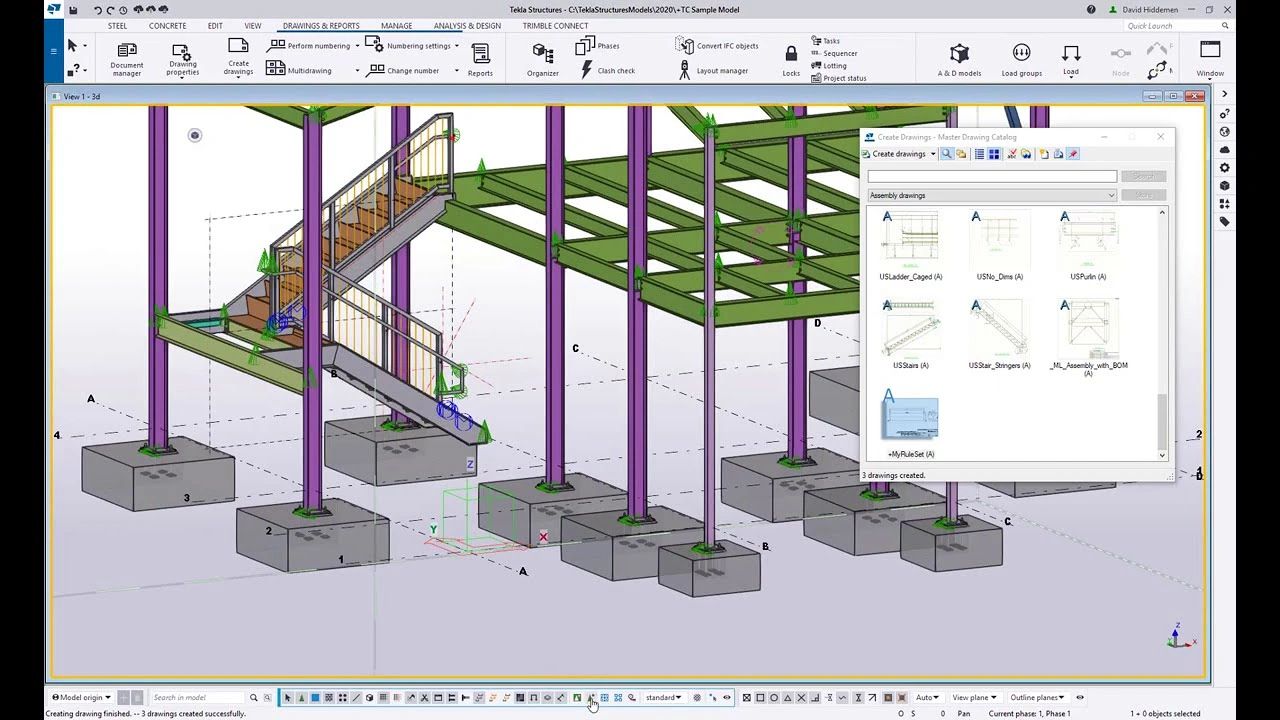
3D modeling and building information modeling moved steel detailing into a more visual and collaborative environment. Detailers can now see how members, connections, embeds, stairs, rails, and field conditions relate before the work reaches the shop.
BIM also gives architects, engineers, contractors, fabricators, and erectors a shared reference point. That reduces ambiguity, helps reveal conflicts earlier, and supports better decisions before material and labor are committed.
Modern technology and the shop-floor test
Today’s detailing tools keep advancing, with stronger model integration, fabrication data, CNC file outputs, and emerging automation. Those tools can make teams faster and more consistent, but they still have to pass the shop-floor test.
The question remains practical: can the package be fabricated efficiently, erected safely, and understood by the people doing the work? At American Iron Steel Detailing, that is where technology, coordination, and craft judgment meet.
Where steel detailing goes next
The future will bring better coordination, smarter tools, and more connected workflows between detailing and fabrication. The firms that do this well will not be the ones chasing technology for its own sake. They will be the ones using it to protect quality, schedule, safety, and practical workmanship.